


If your parent is living with dementia, late afternoon can be the hardest time of day. Around 4–6 PM many families notice pacing, confusion, and distress increase. This behavioral pattern is known as dementia sundowning, and how a care facility manages it reveals a great deal about their clinical capability.
What Is Sundowning in Dementia?
Sundowning is a behavioral pattern commonly seen in people living with Alzheimer's disease or other forms of dementia. Studies estimate that up to 20–45% of people with dementia experience sundowning symptoms. As daylight fades, the brain's internal clock becomes confused, often leading to agitation, pacing, anxiety, or disorientation.
Common symptoms include:
- Increased confusion in the late afternoon
- Restlessness or wandering
- Anxiety or irritability
- Difficulty sleeping
The "Big Box" Approach to Memory Care
Families exploring memory care in Howard County, Maryland often assume that larger facilities provide better clinical care. However, many tour massive 100-bed corporate facilities and only see the beautiful, secure wings—not how they operate when staffing levels drop and 30 residents begin sundowning simultaneously.
When a large facility is understaffed, caregivers cannot provide the 1-on-1 redirection needed to calm an agitated resident. Instead, the default institutional response relies heavily on chemical restraints—administering antipsychotics or heavy sedatives simply to keep the floor manageable.
The Chemical Cost: Chemical sedation severely impairs functional mobility, increasing the risk of catastrophic falls, muscle atrophy, and accelerated cognitive decline.
Large Memory Care vs. 8-Bed Residential Model
As Doctors of Physical Therapy, the founders of Columbia Care Home approach dementia care from a physiological and environmental perspective. We know that agitation is a symptom, not a character flaw. Managing it requires a clinical understanding of the autonomic nervous system.
The Sundowning Protocol Comparison
| Intervention Strategy | Large Corporate Facility | 8-Bed Model (Columbia Care) |
|---|---|---|
| Primary Response | Sedative Medication (PRN) | Behavioral Redirection & Sensory Calming |
| Sensory Environment | Echoing Hallways, Paging Systems | Low-Stimulation Residential Acoustics |
| Caregiver Consistency | Rotating Shift Workers | Familiar Faces (High Trust) |
| Daytime Routine | Passive Group Activities (TV/Bingo) | Therapeutic Mobility Work |
The Bio-Mechanical Approach to Dementia Anxiety
People with dementia often pace because their bodies are trying to process nervous energy that they cannot express verbally. If you restrict that wandering, agitation spikes. If you drug that wandering, they fall.
At our home located at 10610 Hickory Point Lane, we use a proactive, mechanical approach to manage the psychological symptoms of dementia. This clinical philosophy is rooted in the Doctor of Physical Therapy-owned advantage that defines our leadership. Learn more about our 8-bed memory care model and clinical approach.
Burning the Energy
We don't wait for sunset to manage sundowning. Our caregivers are trained by Doctors of Physical Therapy to implement aggressive, supervised daytime mobility routines. By keeping residents active and moving during the day, we help reset their circadian rhythms.
The 1:3 Advantage
When agitation does occur, a strict 1:3 caregiver-to-resident ratio and 24/7 overnight awake staff matter immensely. It allows our staff the time to walk *with* the resident, hold their hand, and gently redirect their focus without the pressure of 15 other call bells ringing.
Environmental Triggers: Why Smaller is Calmer
Massive facilities are inherently overstimulating. The sounds of dietary carts rolling over tile, overhead pages for nursing staff, and the visual clutter of 100 people moving through a dining hall can overwhelm a healthy brain, let alone one battling cognitive decline.
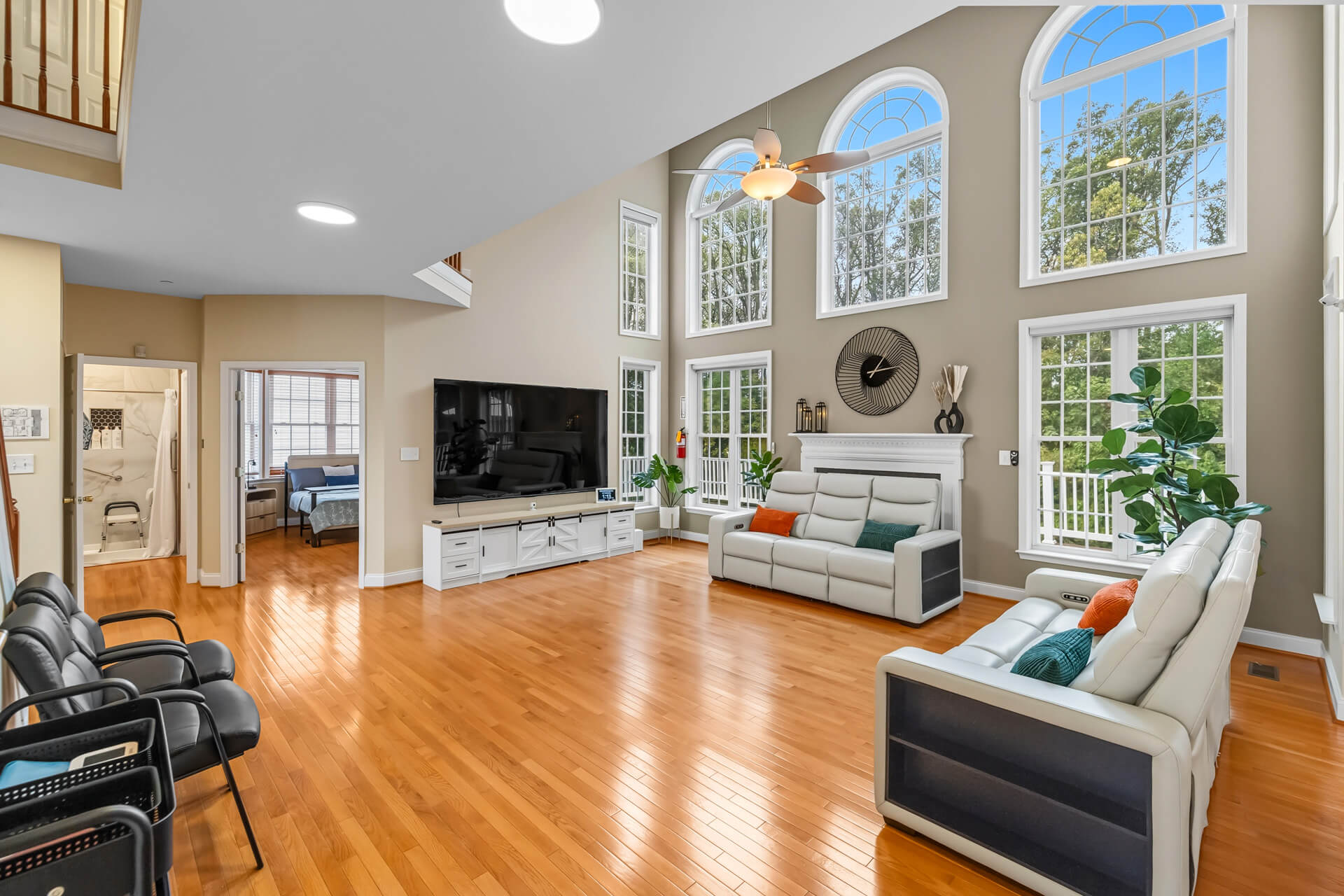
An 8-bed residential home looks, sounds, and feels like a real house. We control the lighting as evening approaches. The ambient noise is limited to the soft sounds of dinner preparation or classical music in the living room. This environmental suppression of chaos is one of our most effective, non-pharmaceutical interventions. To understand how this compares to the high-stimulation environment of a 100-bed facility, read our guide on 8-bed vs. large facility care.
Frequently Asked Questions About Sundowning
Why does dementia sundowning happen?
Dementia sundowning occurs due to a disruption in the brain's internal clock (circadian rhythm). As natural light decreases, individuals with cognitive decline may become confused about the time of day, leading to anxiety and restlessness.
Is medication necessary for sundowning?
While many large facilities rely on medication for behavior management, many cases of sundowning can be managed through environmental adjustments, consistent routines, and adequate daytime physical activity.
What time does sundowning usually start?
Sundowning typically begins in the late afternoon (around 4:00 PM to 6:00 PM) as daylight begins to fade.
Can exercise reduce sundowning symptoms?
Yes. Clinical studies and our own experience as physical therapists show that structured daytime mobility helps regulate sleep cycles and reduces the build-up of nervous energy that leads to late-day agitation.
Can a family member stay overnight during difficult sundowning episodes?
Yes. While our 24/7 awake staff is professionally trained to handle these episodes, we understand that sometimes a familiar family presence is the best medicine during a difficult transition. We encourage family involvement that supports the resident's peace of mind.
For questions specific to our home's care model and admissions, our full FAQ covers what families ask most.
Learn How We Handle Late-Day Agitation
If your parent is struggling with late-day dementia agitation or sundowning, speak directly with our Doctor-led team to learn how a smaller, calmer care environment can help. You do not have to navigate this journey alone.